0
0


Multi compartment backpacks: organisation without the bulk

A multi compartment backpack is only useful when each compartment has a job. The right layout gives a phone, keys, cable, bottle and laptop a fixed home you can reach without opening the main bag, using thin pockets rather than padded dividers that add bulk. Fieldwrks packs are built that way: a fixed set of pockets, one purpose each, and every pack under 1 kg empty.
Key takeaways
- More pockets add seams, zips and fabric, which is weight; the right pockets add speed.
- Six items cause most of the digging: phone, keys, cable, bottle, laptop and a change of clothes. Each needs one fixed place.
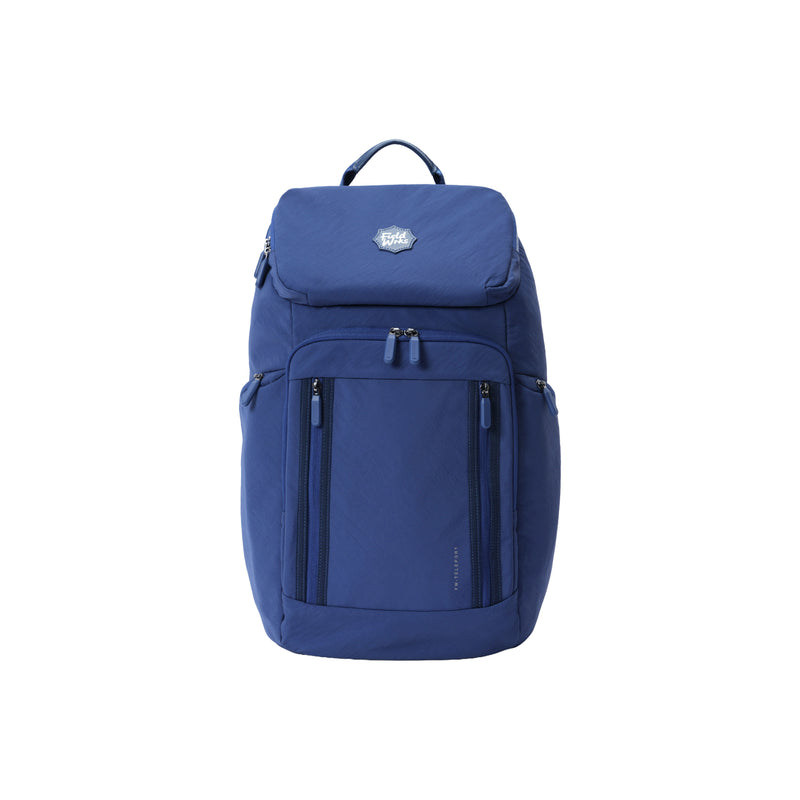
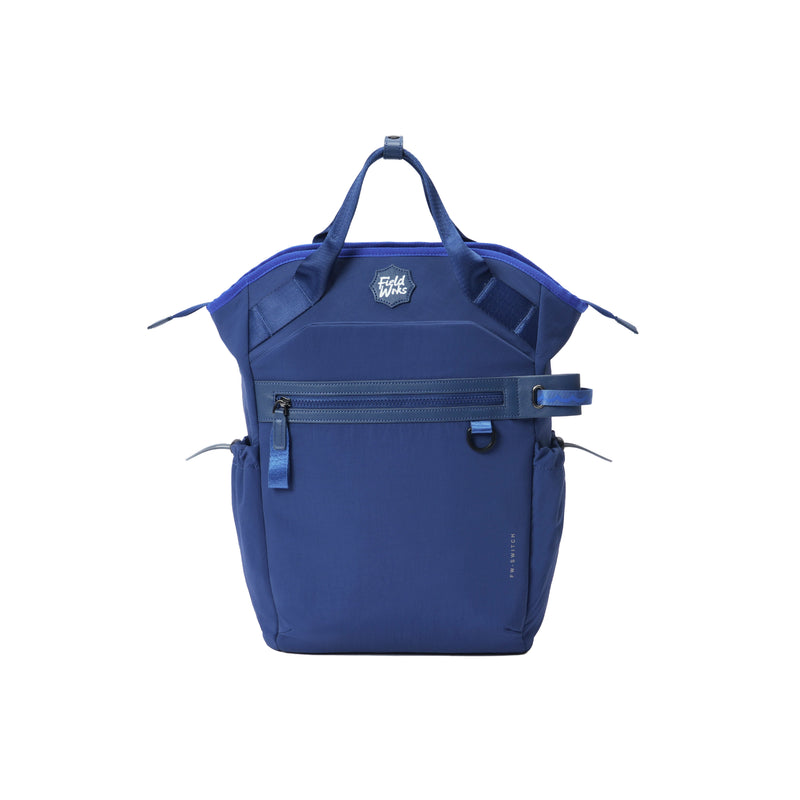
- The Teleport carries its organisation mostly outside, with dual vertical front zips; the Switch carries it inside, with a laptop sleeve and a separate iPad sleeve.
- Fieldwrks packs stay light because the pockets are sewn in as sleeves and slip pockets rather than stiff panels, so every pack folds flat and weighs under 1 kg.
Is a multi compartment backpack actually better?
Only if the compartments are the right ones. A backpack with many pockets is easy to sell and easy to regret. Every extra zip is a seam, a slider and a strip of fabric, and eight of those add grams and confusion about where the earphones went. The packs people keep for years usually have five to eight places to put things, each with an obvious purpose, and one big main compartment for everything else.
The test is whether you can name what lives in each pocket without looking. If you cannot, the bag is organising you rather than the other way round.
Which pocket does which job?
Match the item to the pocket type, in order of how often you reach for it:
| Item | The pocket it wants | Why |
|---|---|---|
| Phone, cards | Top or front quick-access zip pocket | One hand, no need to open the main bag; a zip keeps it in when the bag tips |
| Keys, earphones | Small slip pocket, or a pen loop beside it | Shallow so they do not sink; fixed so you stop patting your pockets |
| Charger, cable, mouse | Internal slip pocket or mesh zip pocket | Kept off the laptop face; mesh shows you which cable is which |
| Bottle | Side pocket with a cinch cord or a hidden zip | Outside the main bag, so a leak never reaches the laptop |
| Laptop, tablet | Dedicated sleeve against the back panel | Weight near the spine, padding on the side that takes knocks |
| Change of clothes, lunch | Main compartment | Soft and bulky, it should fill whatever space is left, not fight a divider |
A good laptop backpack with organiser features follows this map. Anything beyond it is a pocket you will forget you have.
 In this note
Fieldwrks Teleport795 g · 35 L · 15.6" laptop
₹3,699
In this note
Fieldwrks Teleport795 g · 35 L · 15.6" laptop
₹3,699How is the Teleport laid out?
The Fieldwrks Teleport backpack is the map above built for a commute: 29 L, 795 g, organisation split between outside and inside.
- Dual vertical front zip pockets. One for the phone and cards, one for what you reach for on the metro: earphones, a pen, the office ID.
- Hidden zippered side bottle pocket. The bottle sits behind a zip, so the bag keeps a clean profile and the bottle stays put when the bag lies down.
- Top mesh zip pocket. Inside, at the top: charger, cable and mouse, visible through the mesh.
- Two slip pockets and two pen loops. Keys, a notebook and two pens, held upright instead of at the bottom.
- Padded laptop sleeve. Up to 15.6 inches, against the back panel.
That leaves the main compartment for a jacket, a lunchbox or a change of clothes, which is the point of a backpack with multiple compartments: the big space stays big.
How is the Switch laid out?
The Fieldwrks Switch backpack takes the opposite approach: 26 L, 805 g, with the organisation mostly inside, because it also converts into a hand tote. The removable straps tuck into a pocket and snap-closure top handles take over, so the outside has to stay clean.
- Laptop sleeve for up to 15.6 inches, plus a separate iPad sleeve, so the tablet is never loose against the laptop.
- Two internal slip pockets and a pen pocket for the charger, keys and a pen.
- Front zip slip-in pocket for the phone.
- Cinch-cord side bottle pockets that tighten around the bottle.
For a meeting-heavy day, this is the office backpack with organiser pockets that does not look like a backpack when you walk into the room.
Where does the bulk come from in an organiser backpack?
Not from the pockets, from how they are built. The heavy organiser backpack in a mall window usually has:
- Stiff foam panels behind every pocket, so it stands up empty on the shop floor.
- A padded divider between the main and secondary compartments, which halves the usable space.
- Thick, stiff fabric everywhere, chosen for how it looks on a shelf.
Fieldwrks packs go the other way. The exterior is Aerology™ nylon, a feather-light, water-resistant fabric over a durable polyester lining, and the pockets are sewn in as sleeves and slip pockets rather than stiff boxes. The result is a lightweight organiser backpack that folds flat when empty and weighs 795 g with the Teleport's full pocket set. The bright orange interior does the last bit: dark things stand out against it.
 In this note
Fieldwrks Switch805 g · 26 L · 15.6" laptop · Convertible carry · Work trips · Weekends
₹3,299
In this note
Fieldwrks Switch805 g · 26 L · 15.6" laptop · Convertible carry · Work trips · Weekends
₹3,299How do you pack a multi compartment backpack so you can find things?
Assign, then stop moving things. Rules that hold in 2026:
- One item, one pocket, always. The phone does not go in the main compartment even once.
- Heavy at the back, light at the front. Laptop in the sleeve, clothes in the main space, small things in the outer pockets.
- Cables in a mesh or slip pocket, never loose.
- The bottle outside the main bag, in its side pocket, every time.
- Empty the bag on Sunday. Receipts, wrappers and the second charger are what make a light bag heavy.
For a full breakdown of what goes where on an office day, read office backpack compartments explained. For the daily minimum, see the everyday carry backpack, and for a two-night trip, our weekend trip packing list.
Frequently asked questions
How many compartments should a backpack have?
A multi compartment backpack needs one large main compartment, a laptop sleeve and four to six small pockets with fixed jobs: phone, keys, cables, bottle. More than that and pockets start to overlap in purpose, which is when things get lost. Fewer and the small items end up loose at the bottom.
Is an organiser backpack heavier than a plain one?
It can be, if the organisation is built from stiff panels and padded dividers. Pockets sewn as thin sleeves and slip pockets add very little. The Teleport carries a full pocket set and still weighs 795 g empty.
Which Fieldwrks backpack is best for organisation?
For a commute, the Teleport: dual vertical front zip pockets, a hidden side bottle pocket, a top mesh zip pocket, two slip pockets, two pen loops and a padded laptop sleeve in 29 L. For a weekend, the Reroute adds a mesh divider and a dedicated shoe compartment in 35 L.
Does a backpack with many pockets protect a laptop better?
No. Laptop protection comes from the sleeve: padding, position against the back panel and whether it is suspended above the base. Extra pockets around it neither help nor hurt, unless a leaking bottle pocket opens into the main compartment.
If your day is a commute with a laptop, chargers and a bottle, the Teleport has a pocket for each. If it ends in a meeting room, the Switch. The full range is at /collections/all.